Specify the fibre and yarn
Technical fabrics require a defined reinforcement material and yarn specification. Carbon, glass and aramid fibres are different materials. A hybrid structure must explicitly describe their combination.
 +7 499 666-62-43
MANUFACTURING · WOVEN MATERIALS
Reinforcement fabric is selected for a particular shape and manufacturing method. Fibre type, weave and areal weight address different aspects of that choice.
Discuss woven materialsHow the process works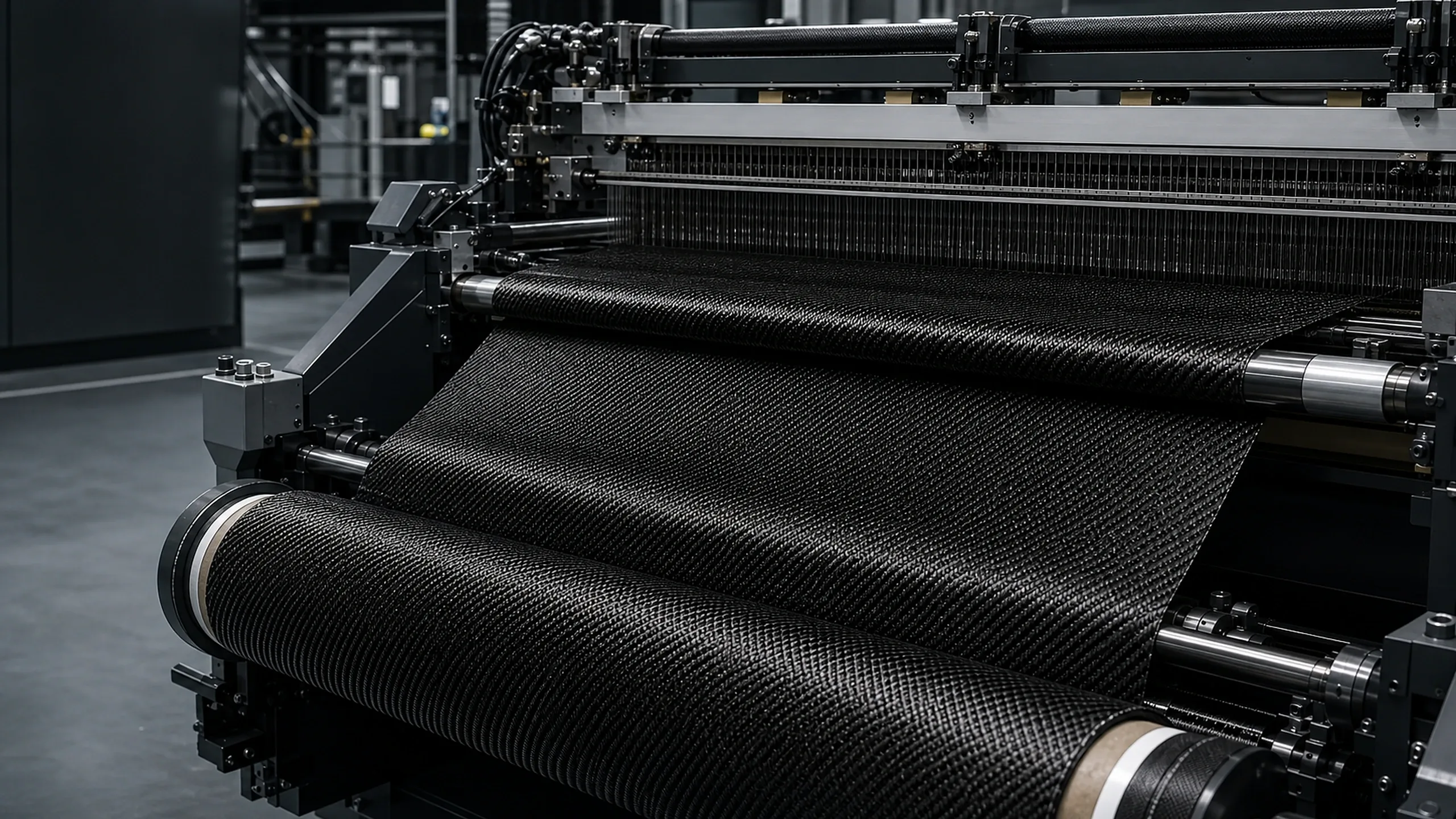
01 / YOUR PROJECT
For carbon, glass, aramid or hybrid fabric, describe the next operation: impregnation, cutting and layup. An attractive surface pattern may be a requirement, but it does not replace process specifications.
02 / PROCESS
This overview explains the general principle of weaving. Composition, specification and available format are confirmed when selecting a material.
Technical fabrics require a defined reinforcement material and yarn specification. Carbon, glass and aramid fibres are different materials. A hybrid structure must explicitly describe their combination.
Longitudinal warp yarns interlace with transverse weft yarns. Plain, twill and satin have different interlacing patterns. These affect draping over a shape and the stability of the pattern.
Areal weight is the mass per unit area of fabric. It is considered together with yarn type and weave. Equal areal weight does not mean that two fabrics drape in the same way over a complex surface.
Specify fabric width, quantity and requirements. If the finished surface will be visible, define appearance criteria in advance. Check handling and further processing requirements against the selected fabric's documentation.
A flat panel and a contoured surface require different draping behaviour. Show the shape, radii and areas where the pattern must retain its direction. If a fabric has already been used in your process, provide its designation and list the changes required. This is more precise than selecting a replacement from a photograph.
Hexcel: woven reinforcements03 / QUESTIONS
This section covers woven reinforcement materials. Pre-impregnated reinforcement is considered separately as prepreg. Specify whether you need dry material or a prepared resin system.
A substitution requires an assessment of layup, appearance and design requirements. First explain why a different fabric is needed: availability, draping, pattern or another parameter. A suitable alternative can then be discussed.
04 / ENQUIRY
Specify fibre, weave, areal weight, width and quantity. Add the product shape, processing method and requirements for the visible face.
Submit your projectQUICK RESULTS